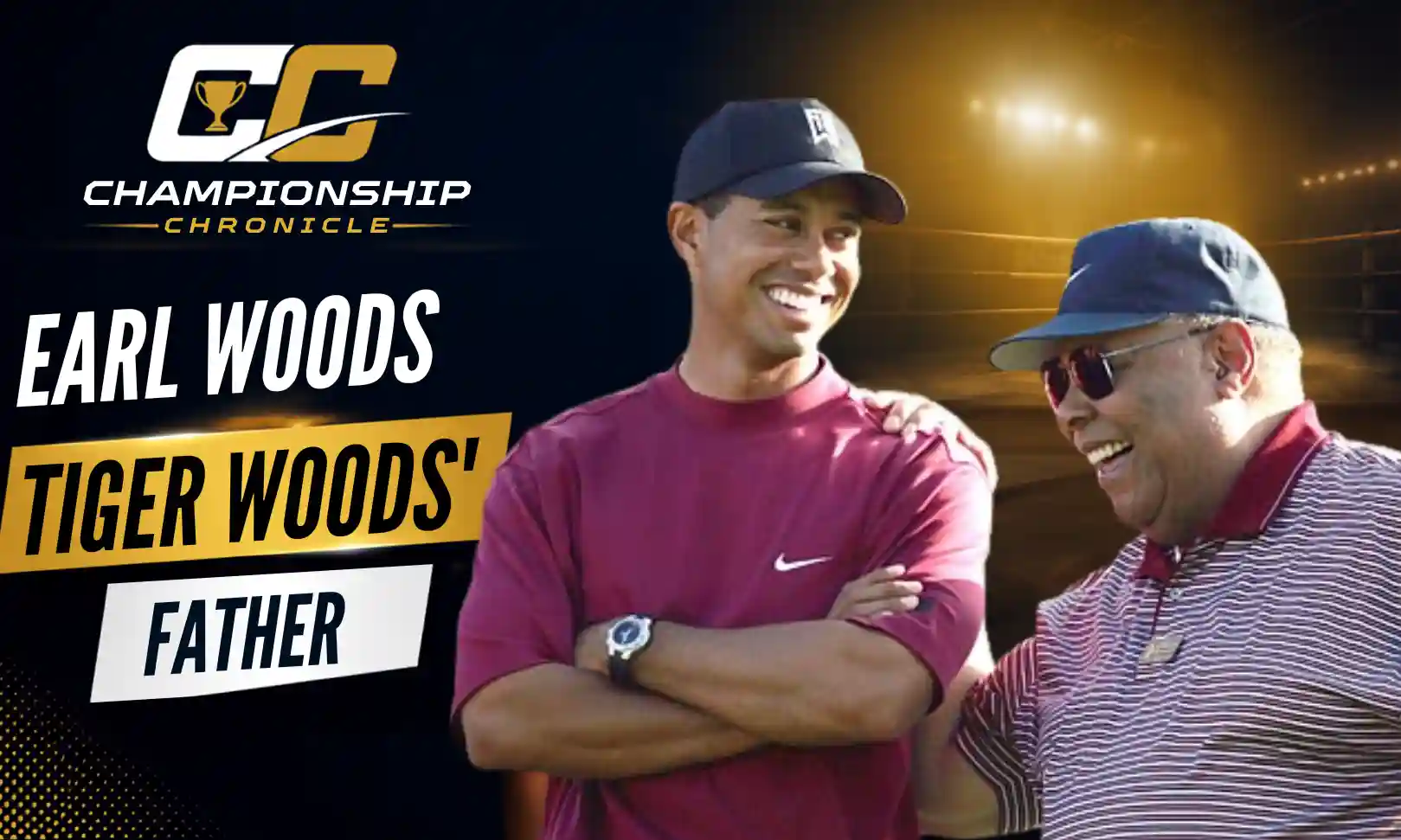
Tiger Woods’ father, Earl Woods, was not only an army Green Beret and Vietnam war vet who made his baby boy into the world’s best golfer. He was a much more complex man than simply the father shown through a series of highlights: he was a pioneering African American athlete, a career combat soldier, an author, and an individual whose mistakes and even death played just as important a role in shaping Tiger Woods as his golf coaching did. This guide contains everything you need to know about Earl Woods’ entire life, his service in the military, the true origins of the Tiger moniker, his other children, and what his death meant for his son.
Earl Woods Wiki: Quick Facts at a Glance
Here is a fast reference table with the details people search for most.
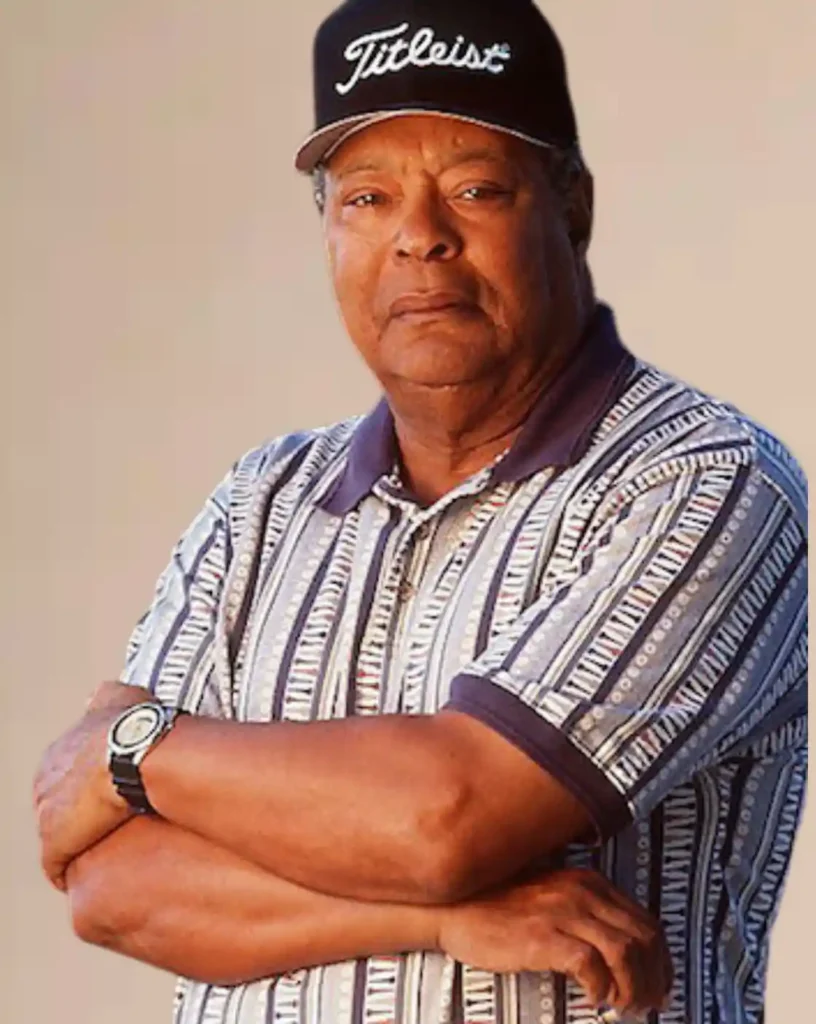
| Full Name | Earl Dennison Woods |
| Known As | Tiger Woods’ father |
| Born | 5 March 1932, Manhattan, Kansas |
| Died | 3 May 2006 (aged 74), Cypress, California |
| Zodiac Sign | Pisces |
| Nationality | American |
| Heritage | African American, Chinese and Native American |
| Faith | Raised Baptist |
| Height | Approx. 5 ft 11 in (180 cm) |
| Education | Kansas State University (BS, Sociology) |
| Military Rank | Lieutenant Colonel, US Army (Green Beret) |
| Career | Army officer, defense contractor, coach, author |
| First Wife | Barbara Gary (married 1954, divorced 1968) |
| Second Wife | Kultida Punsawad (married 1969) |
| Children | Four: Earl Jr., Kevin, Royce and Tiger |
| Famous Grandchild | Cheyenne Woods (pro golfer) |
| Net Worth at Death | Estimated 2 to 5 million USD |
Earl Woods Early Life and Childhood
Earl Dennison Woods was born on March 5th, 1932 in Manhattan, Kansas. As the youngest of the twelve children of Miles Woods, an epileptic Baptist stonemason and caretaker, Earl had a tough upbringing that would make him resilient enough to join military service. Earl had African-American, Chinese and Native-American descent, an interesting heritage that he would pass to his son Tiger.
Both of Earl’s parents died when Earl was a child, so he learned independence at an early age. This quality made him become an athlete and soldier when older.
Education and Breaking the Barriers in the Game of Baseball
Earl enrolled in Kansas State University and graduated from Kansas State College where he created a historic precedent – Earl Woods became the first African-American baseball player of Big Seven Conference, that later became known as Big 12. Being a professional baseball player in a segregated period, he faced the discrimination when not being able to enter restaurants and hotels because of his color of skin. That made him tougher and shaped his future attitude towards raising Tiger in a mostly white sport.
In 1953 Earl graduated from college with the degree in sociology and joined the United States Army where he stayed for about two decades.
Earl Woods’ Military Service: From Kansas to Green Berets
For about two decades Earl served in the US Army and retired as a lieutenant colonel in 1974. He took part in two tours of Vietnam War, the second of them in the elite unit of the US Army Special Forces, called Green Berets. Besides that he served as an instructor of military science at the City College of New York. Although there are not many precise records about Earl’s military career, the facts about his participation in two tours of duty and special forces work are clear.
Why Is Tiger So Called?
Although he is best known as Tiger Woods’ father, Earl is remembered also for giving a legendary nickname. While being a soldier in Vietnam he created close relations with Lieutenant Colonel Vuong Dang Phong – his bravery impressed Earl so much that he called him Tiger. Later Earl named his son the same name in memory of his friend hoping that someday the Tigers would be able to meet again because of Tiger’s celebrity. Unfortunately, they never saw each other because of death of Lieutenant Colonel in the re-education camp after the fall of Saigon in less than a year since Tiger Woods was born. So the famous nickname is essentially the war memorial.
Life After the Army and Love to Golf
After leaving army, Earl moved to Cypress, California and got a job as a contracts administrator in the defense industry working for firms like Arrowhead Products, Brunswick and McDonnell Douglas and retired in 1988. Earl’s discovery of golf occurred quite accidentally when he was about 42 years old – being a soldier in Brooklyn at Fort Hamilton, he fell in love with golf at first sight and started playing this game very often, even shooting sometimes 70s.
How Earl Woods Shaped Tiger Woods’ Career
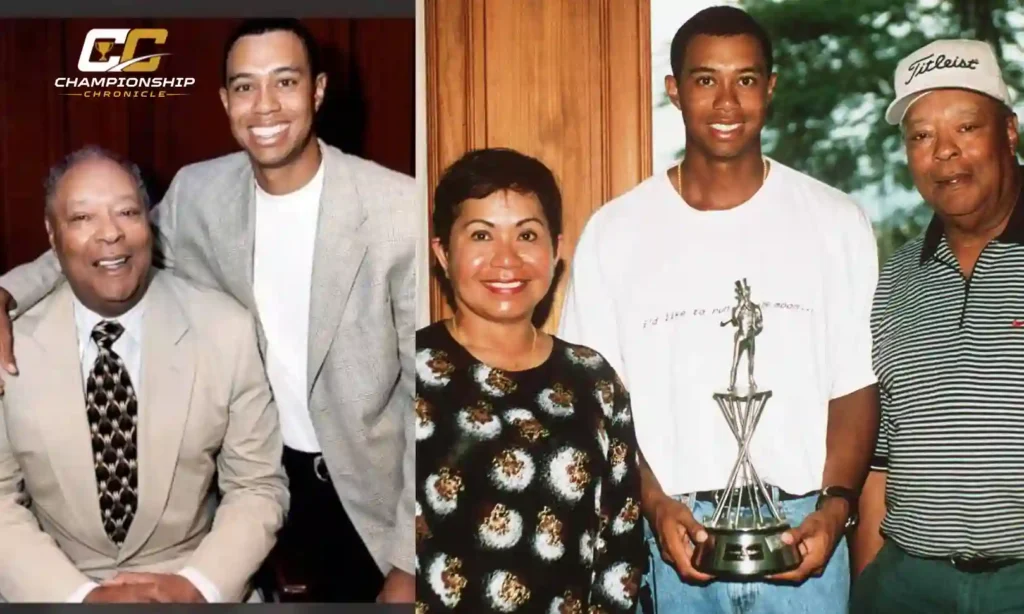
Earl’s defining life’s work was coaching his son. He put a club in Tiger’s hands before the boy could walk, reportedly beginning at around ten months old, and by age two Tiger was a golf prodigy. Earl coached him exclusively through his earliest years and remained his guiding force as more specialised coaches were added.
His methods were unusual and, to some, controversial. He deliberately tried to toughen Tiger’s mind, jingling coins, dropping bags and coughing during swings to build unbreakable concentration under pressure, with an agreement that Tiger could stop any time. He was equally an encourager, planting seeds of belief and famously predicting his son would become a transcendent figure. Earl also secured the business foundation for Tiger’s rise, hiring advisers to smooth the path to a professional career and record-breaking sponsorships, and co-founding the Tiger Woods Foundation. He wrote two bestselling books on the process, Training a Tiger and Playing Through.
Earl Woods Wives and Children: The Whole Family
Earl married twice and had four children. His story with his first family is one that many Tiger profiles skip, and it is worth telling fully.
He married his first wife, Barbara Gary, in 1954, and they had three children before divorcing in 1968. He met his second wife, Kultida Punsawad, a Thai woman of Thai, Chinese and Dutch heritage, while stationed in Thailand in 1966, and they married in 1969 in New York. Their only child together, Eldrick Tont Woods, better known as Tiger, was born in 1975. The table below lays out his children.
| Child | Mother | Born | What They Are Known For |
|---|---|---|---|
| Earl Dennison Woods Jr. | Barbara Gary | 1955 | Most public sibling; father of golfer Cheyenne Woods |
| Kevin Dale Woods | Barbara Gary | 1957 | Lives with multiple sclerosis since 2009 |
| Royce Renee Woods | Barbara Gary | 1961 | Former college basketball player; helped care for Earl |
| Tiger (Eldrick) Woods | Kultida Punsawad | 1975 | One of the greatest golfers in history |
The three older children grew up largely apart from Tiger, who was much younger, and by their own accounts held no jealousy toward their famous half-brother. In later years, though, Earl Jr. spoke publicly about feeling that Tiger had drifted away from the family, especially as Kevin’s health declined. The family was last together around the time of Earl’s death and funeral in 2006. Earl’s granddaughter Cheyenne Woods, daughter of Earl Jr., carried the golf torch forward as a professional on the LPGA and Ladies European Tours, and was first introduced to the game by her grandfather.
What Happened to Kultida, Tiger’s Mother
The other prominent figure in Tiger’s life has been his late mother, Kultida Woods. Tough and uncompromising, she was the disciplinarian to Earl’s idealist, and Tiger has made it clear that he feared his Special Forces dad less than he did his mother. She has continued being present at his most significant moments and is counted among his strongest supporters.
Earl Woods’ Death and What It Made of Tiger’s Life
In 1998, Earl Woods was diagnosed with prostate cancer, which was defeated, but it returned and spread by 2004. Earl passed away on 3 May 2006, aged 74, in his home in Cypress, California, due to heart complications. Earl was buried in the vicinity of his parents at Sunset Cemetery in Manhattan, Kansas. Tiger, who referred to his father as his best friend and biggest role model, was deeply grieving.
The period following Earl Woods’ passing is a fascinating case of cause-and-effect. In the next ten years, a map Tiger had relied upon all his life was lost forever. As described in the groundbreaking ESPN story, Tiger developed an interest in Navy SEALs, reminiscent of his father’s military career, and went visiting their training centers just weeks after his father’s death. Then, his private life unravelled in the infamous 2009 adultery scandal that led to his divorce from Elin Nordegren, followed by years of injuries and championship drought.
Quite a few of those who know Tiger well and, perhaps, Tiger himself on occasion, see this unravelling as a consequence of losing the man who had always been a rock in his life. The eventual comeback of Tiger, culminating in the 2019 victory at The Masters, was widely interpreted as Tiger finally learning to stand up on his own feet without guidance from his father.
Earl Woods Controversies and Nuances
It goes without saying that an authentic portrait cannot be whitewashed. Earl was, in fact, a controversial character by many people’s accounts, including his family members. His biographers revealed his infidelity while he was married twice and he openly admitted having a tough time at the end of his life with his son over what Earl referred to as ‘woman trouble.’ His coaching methods, which could be described as demanding, have been discussed for decades – some see them as brilliant vision, others as excessive. An attempt to describe Earl Woods as an inspiring but flawed individual is truer and more helpful than idealizing him like many tributes do.
Earl Woods Net Worth: A Reasonable Estimate
A realistic estimate suggests Earl Woods’ net worth was somewhere in the region of 2 to 5 million US dollars. It’s a reasonable guess, not a sensationalist statement, which is closer to the truth than the wealth of Earl Woods estimated as huge amounts of money.
The pension that Earl received from the military, his salary as a defense contracts administrator, his royalties from two bestsellers and earnings connected to his work with his son’s company and charity organization amount to quite a decent but not excessive sum. It’s crucial to understand that the estimate does not include his son’s wealth, which has reached billionaire status due to his winnings and endorsements. Earl Woods’ personal fortune was much smaller compared to it.
Earl Woods Physical Stats
As a former catcher and career soldier, Earl had a sturdy, athletic build well into middle age. The table gathers the physical details, with figures marked approximate where the record is not precise.
| Height | Approx. 5 ft 11 in (180 cm) |
| Build | Sturdy and athletic in his prime |
| Hair Colour | Black (grey in later years) |
| Eye Colour | Dark brown |
| Body Measurements | Not documented |
| Tattoos | None publicly documented |
Fact Check: Setting the Record Straight
A few myths and errors follow Earl around online. The table below corrects the ones that appear most often.
| Common Claim | The Accurate Picture |
|---|---|
| Tiger was named after a pet or randomly | He was named after Earl’s Vietnamese war comrade, Tiger Phong |
| Tiger is Earl’s only child | Earl had four children; three from his first marriage to Barbara Gary |
| Earl was a lifelong golfer | He did not pick up golf until around age 42 |
| He died only of prostate cancer | Cancer returned and spread, with heart complications also reported |
| He was a flawless father figure | He was inspiring but flawed, with documented personal failings |
Earl Woods Trivia: Facts and Lesser-Known Details
- He was the first Black baseball player in what became the Big 12 Conference.
- He did not start playing golf until he was around 42 years old.
- He put a golf club in baby Tiger’s hands at roughly ten months old.
- Tiger’s nickname honours a South Vietnamese officer Earl served alongside.
- He wrote two bestselling books, Training a Tiger and Playing Through.
- He co-founded the Tiger Woods Foundation for youth education and welfare.
- His granddaughter Cheyenne Woods became a professional golfer he helped start.
- His voice narrated a famous 2010 Nike commercial after his death.
- His hobbies included golf, reading and mentoring young athletes.
- He is buried beside his own parents in his Kansas hometown.
Earl Woods FAQ
Who was Earl Woods?
He was Tiger Woods’ father, a US Army Green Beret, Vietnam veteran, author and the coach who developed his son into a golf legend.
How did Earl Woods die?
He died on 3 May 2006 at age 74, after prostate cancer returned and spread, with heart complications also reported.
Why is Tiger Woods called Tiger?
Earl nicknamed him after Vuong Dang Tiger Phong, a South Vietnamese officer and friend from his war service.
How many children did Earl Woods have?
Four: Earl Jr., Kevin and Royce with first wife Barbara Gary, and Tiger with second wife Kultida.
What was Earl Woods’ military rank?
He retired from the US Army as a lieutenant colonel and served with the Green Berets.
Did Earl Woods play a sport himself?
Yes. He was a college baseball catcher and the first African American to play in his conference.
How did Earl’s death affect Tiger?
Tiger has described losing his anchor; the years after saw a personal spiral before his later comeback.
What is Earl Woods’ net worth?
A realistic estimate is around 2 to 5 million dollars at his death, separate from Tiger’s fortune.
Who is Earl Woods’ famous granddaughter?
Cheyenne Woods, daughter of Earl Jr., is a professional golfer he helped introduce to the game.
Where is Earl Woods buried?
He is buried at Sunset Cemetery in Manhattan, Kansas, near his parents.
Conclusion: The Man Behind the Legend
Earl Woods deserves to be remembered as more than a caption under his son’s trophies. He was a barrier-breaking athlete, a decorated soldier who carried a friend’s memory into a nickname the whole world now knows, and a father whose vision, discipline and love produced a once-in-a-century talent. He was also human, flawed, complicated and unafraid of the spotlight. When he died in 2006, he did not just leave behind a grieving champion; he left a void that reshaped Tiger’s life for a decade. Understanding Earl Woods is, in the end, the key to understanding Tiger Woods, and that is why his story still matters.
Read More Biographies of Golf Fame